
Task Group Sequencing (Sequence Mode)
Strict Control of Task Group Sequence
Purpose
- Strict control of task group sequence allows the WMS to explicitly define the order in which task groups are delivered to a port, rather than relying on AutoStore's internal prioritization. This is essential when a specific picking sequence of orders is required for operational or process reasons.
How It Works
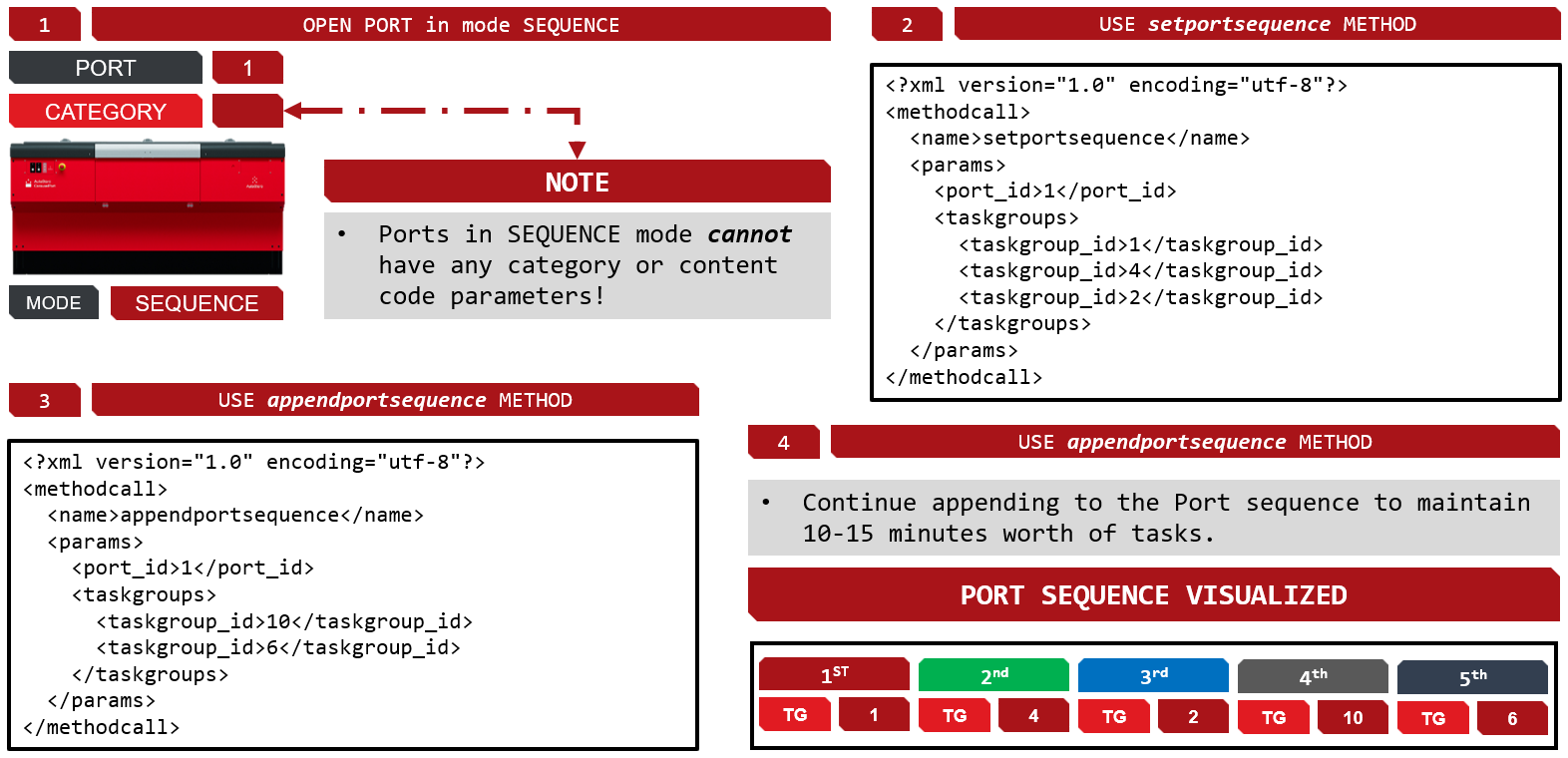
- Open the port in
SEQUENCEmode using theopenportmethod. When using sequence mode, do not assign any category or content code to the port, as the sequence will be managed directly by the WMS. - Use the
setportsequencemethod to define the initial sequence of task groups for the port. This will override any existing sequence. - To add more task groups to the sequence, use the
appendportsequencemethod. This allows you to extend the sequence as needed.
Sequence Structure
- The sequence is defined in terms of task groups (not individual tasks/bins). Within each task group, AutoStore can still optimize the order of bin deliveries unless further ordering is specified at the task level.
Restrictions
- Task groups assigned to a sequence port must have a unique category not used by other ports. This prevents them from being picked by non-sequenced ports and avoids conflicts.
- You cannot update or cancel a task group once it is in a port sequence, but you can add tasks to an existing task group in the sequence.
- If you need to change the sequence, use
setportsequenceto override the current sequence.
Performance Considerations
- Using strict sequencing reduces AutoStore’s flexibility to optimize throughput, so only use it when necessary. Always ensure the sequence queue is sufficiently populated to avoid idle time at the port.
- It is critical to maintain at least 10–15 minutes’ worth of tasks in the port sequence queue to ensure smooth operation and minimize wait times. For example, if a port is expected to process 200 bins per hour, keep at least 50 tasks queued in the sequence.
If your task groups all have 5 tasks each then the port sequence would need to have at least 10 taskgroups in it at all times. This would suffice the 50 tasks requirement in the above example.
Best Practices
- Only use strict sequencing when operationally required.
- Avoid mixing categories with sequence mode.
- Monitor the queue length and replenish as needed to maintain performance.
This approach ensures that task groups are delivered to ports in the exact order required by your process, with clear control and predictable.
Updated 15 days ago