
Performance Guidelines
Preconditions
The following aspects must be ensured by Solution Design:
- Number of ports matching inbound/outbound throughput.
- Number of robots can ensure fast digging.
- Stacks per robot.
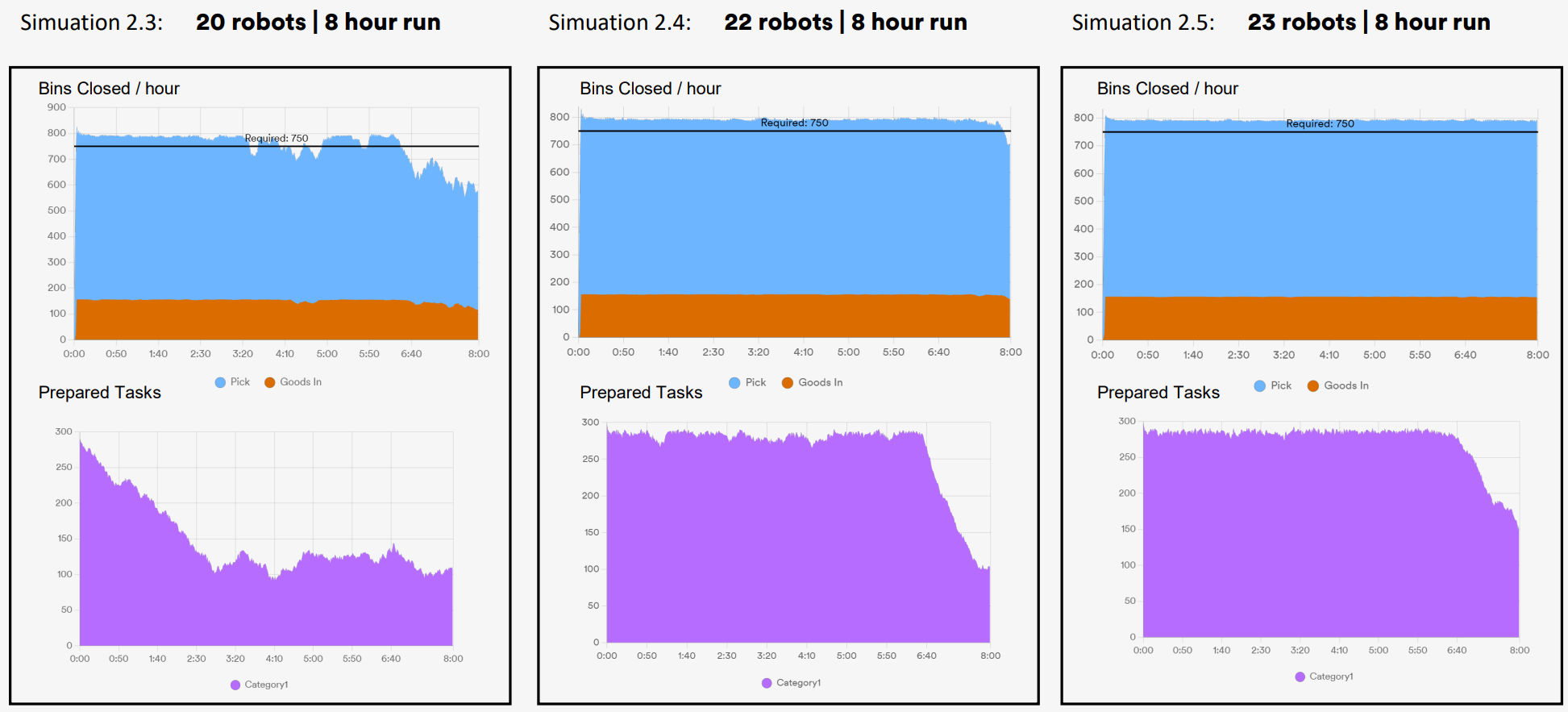
Bad design, mediocre design and optimal design.
Fast Command Handling
The WMS should ensure fast request handling:
closebin→openbin: within approximately 100msclosebin→closeport: within approximately 100ms
Look-Ahead Principle
To ensure bins are adequately prepared and ports remain active, the WMS should schedule tasks for the next ~30 minutes of operation (Look-Ahead). Tasks need to be scheduled in advance so that AutoStore can properly plan bin deliveries.
- AutoStore may need to dig up bins that are covered by unscheduled bins.
- Urgent or ad-hoc tasks can disrupt planned jobs.
- The system may deliver bins to the planned port ahead of time, even before the WMS explicitly requests them.
- Too much preparation (an overly long look-ahead) can congest the top grid, leaving little space for free movement and reshuffling. The 30-minute rule has been validated through millions of simulation runs.
Adjustments Based On Pareto Distribution
- Low Pareto systems: ~20-25 minutes (80/20 rule)
- Medium Pareto systems: ~30-35 minutes (70/30 rule)
- High Pareto systems: ~45 minutes (50/50 rule)
Task Replenishment Strategies
- The first picking session of the day will be slower. Ideally, start the system or load tasks 30 minutes before daily operations begin.
- For an ideal daily profile, the task load should remain steady and gradually taper to zero by the end of the day or shift.
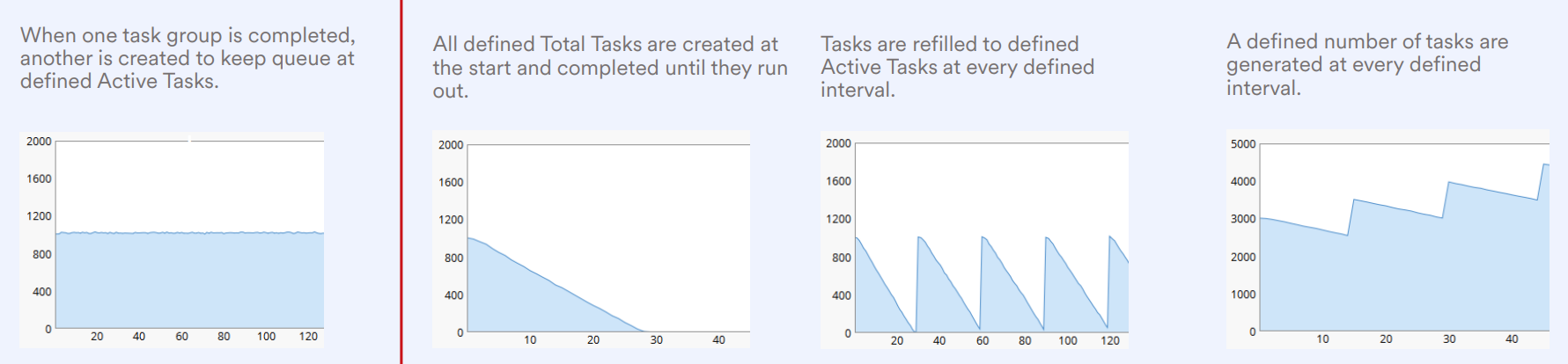
Optimal replenishment strategy vs. no replenishment, interval-based replenishment and fixed replenishment strategies.
Efficient Port Usage
- Avoid opening and closing ports too often, as this can disrupt the internal preparation queue.
- Idle ports tie up resources, reducing overall system capacity, so always aim to use open ports efficiently.
- Avoid leaving a bin open in a port for an extended period of time (i.e. when the
closebinmethod is not called). An open bin may be requested by another port, but since it is not closed, it remains blocked at the current port. This can prevent the requesting port from completing its task and may also block other bins behind it in the physical queue
Flushing Ports
Avoid excessive use of the flushport method, as it has a direct impact on the preparation queue and port throughput by setting bin mode to TOGRID. This method should only be used in well-defined scenarios, such as:
- When a port is
OPENand a deadlock situation must be cleared. - Enabling and/or disabling MultiPort functionality.
- Returning chilled or frozen bins to their designated storage areas as soon as possible.
- Returning bins containing valuable goods to the grid promptly, reducing the risk of theft.
Handling Urgent Orders
- Ad hoc (urgent) bin requests disrupt planned jobs and can reduce efficiency.
- Simulations assume up to 5% urgent orders; higher rates may impact throughput.
Category Considerations
- If using multiple categories (e.g., different order types or port groups), apply the look ahead guideline per category.
- Each port group should have enough work in its category to match its share of the total throughput.
- Keep the number of categories as low as possible—the more categories, the more internal queues. Only increase categories when strictly required.
Minimize Restrictions
- Use optional parameters (item, order, shipment, categories) only when necessary.
- More restrictions reduce AutoStore’s ability to optimize, potentially increasing wait times.
Updated 2 months ago